

We use our New Jersey Shore house year-round, so I didn’t want the design of the space to scream “beach house,” as much as I do love mermaids and sealife. I wanted something more nuanced: spaces that feel connected to their coastal location, but still hold up across seasons: cozy enough for winter weekends, relaxed enough for sandy days.
Coastal design can go wrong when it feels too heavy-handed, leaning too hard on literal translations. Anchors, rope and weather wood with “BEACH” stenciled across it can feel like a theme instead of a home. The solution isn’t swapping accessories. It’s building a foundation that feels calm and livable year-round: comfortable furniture, considered lighting, durable materials, and a palette with the kind of color memory you actually notice by the water.
What Makes A Home Coastal, But Not Costume?
Before reaching for any themed accessory, ask what you actually love about being near the water. The quality of light? The indoor-outdoor rhythm? The way materials weather? The palette of ocean sunsets? The organic, imperfect forms you notice in nature? Those are the cues worth designing around. They create a home that feels coastal because it’s responding to its environment, not because it’s announcing a theme.

Rethink Coastal Colors
Everyone defaults to navy and white stripes, but the coast is far more interesting than that. Watch an ocean sunset and you’ll see soft corals, muted terracottas, dusty pinks, warm ochres, gentle lavenders, tones that shift as the light changes.
You can still use blues and greens, but think in layers: not one obvious “coastal blue,” but a family of related tones that move from airy to deep. That approach feels observational rather than decorative, more “this is what I see here” than “this is what coastal is supposed to be.”
Choose Materials That Get Better With Time
Coastal environments naturally weather materials in beautiful ways. Rather than buying pre-distressed finishes, choose honest ones that develop character slowly: unlacquered brass that patinas, linen that softens, wood that gains warmth and depth.
It’s not instant gratification. But over time, that lived-in quality feels real, because it is.
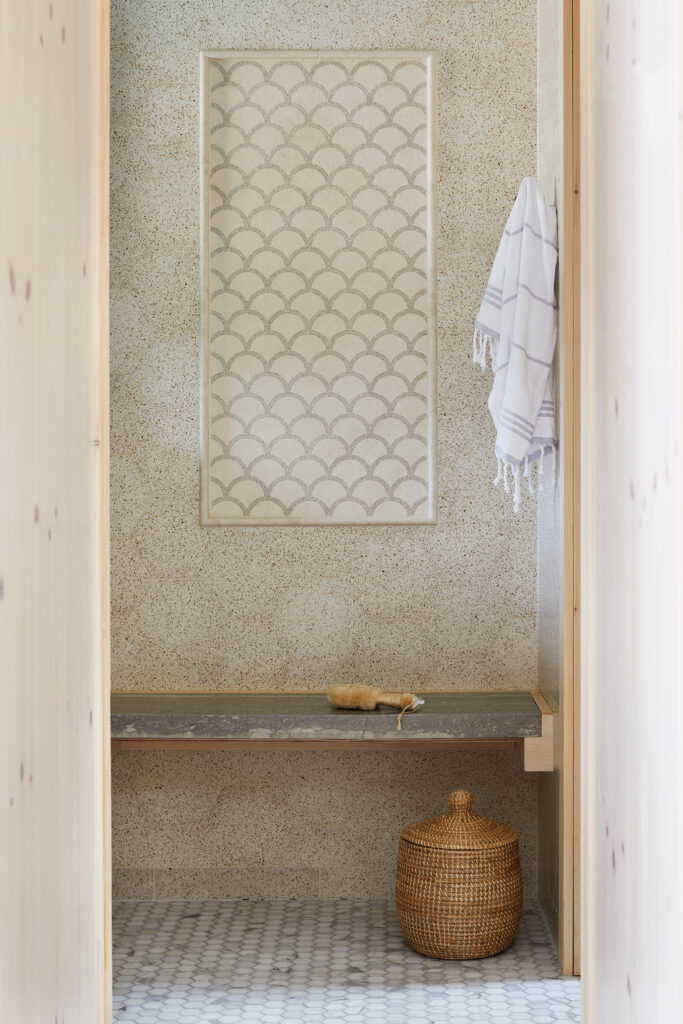
Bring in the Imperfect (on Purpose)
In a coastal house, machine-perfect finishes can feel a little off. The landscape is about variation: irregular waves, shifting sand patterns, shells that are never identical, driftwood shaped by water and time.
Materials that reflect this could be:
- Handcrafted tile with natural variation
- Woven textiles with irregular texture
- Ceramics that show the maker’s hand
- Plaster or limewash finishes with depth and movement
This is where “relaxed” becomes elevated, because the imperfection is intentional.
Coastal by Suggestion
There’s a big difference between a literal anchor on the mantel and a scalloped edge detail on a light fixture. One is a prop. The other is translation.
Look for coastal inspiration through shape: the soft arc of a wave, the ripple of water, the irregular edge of driftwood, the curve where sand meets sea. These references feel sophisticated because they’re subtle and because they’re grounded in observation.
Let the Light Do the Heavy Lifting
The single most important element of coastal design isn’t any object or color, it’s light. Homes near water should feel luminous and open, with an easy connection between inside and outside.
That means prioritizing decisions that support daily life:
- Window treatments that preserve light and views while still giving privacy
- Reflective surfaces with subtle sheen (not high-gloss) to bounce light
- Glass doors or widened openings that improve flow
- A layout that makes the in-and-out rhythm feel effortless
If you can invest anywhere, invest here. True indoor-outdoor connection will always feel more coastal than perfect “beach décor.”
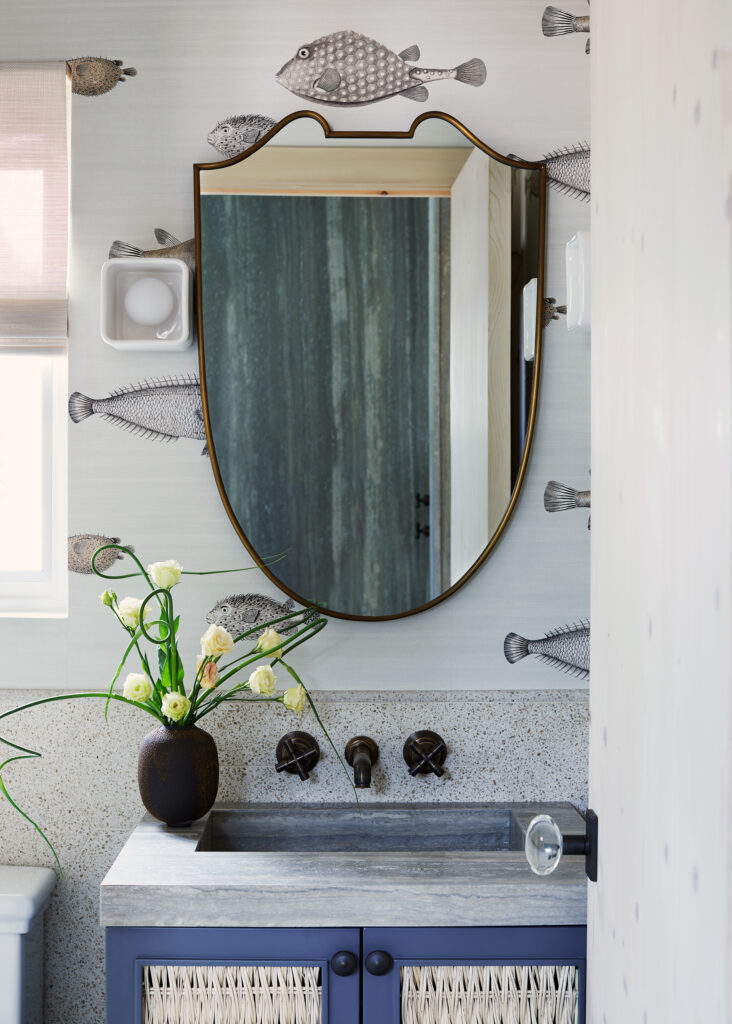
Choose Artful Over Obvious
When you do incorporate marine references, make them artful pieces you’d love even if the home weren’t by the water. The coastal note should be a layer, not the entire point.
One of my favorite examples is wallpaper with cheeky nods to sea creatures; playful, yes, but still elevated. Temple Studio’s Mr. Blow Deep Dive wallpaper is exactly that kind of coastal whimsy with real design credibility.
Look for sculptural forms, witty patterns, ceramics that echo ocean shapes, and details that nod to shells or waves through silhouette and texture.
The Sophistication Test
Ask yourself: does the space feel connected to its location—while still holding up to the design consideration you’d apply anywhere? Or does it feel like a generic room with beach-themed accessories added on top?
Sophisticated coastal style:
- References the marine world through form, color, light, and material not symbols
- Feels collected over time rather than decorated all at once
- Works year-round, not just in summer
- Prioritizes honest materials that age beautifully
- Creates indoor-outdoor flow through architecture
- Embraces organic variation and imperfection
Most importantly, it starts with observation: what do you actually love about the coast and how can those qualities guide your decisions.

Ready to create a coastal home that goes beyond expected themes? Contact Laura Krey Design to explore how we can design a space that embraces seaside living through observation, not decoration.

Leave A Comment